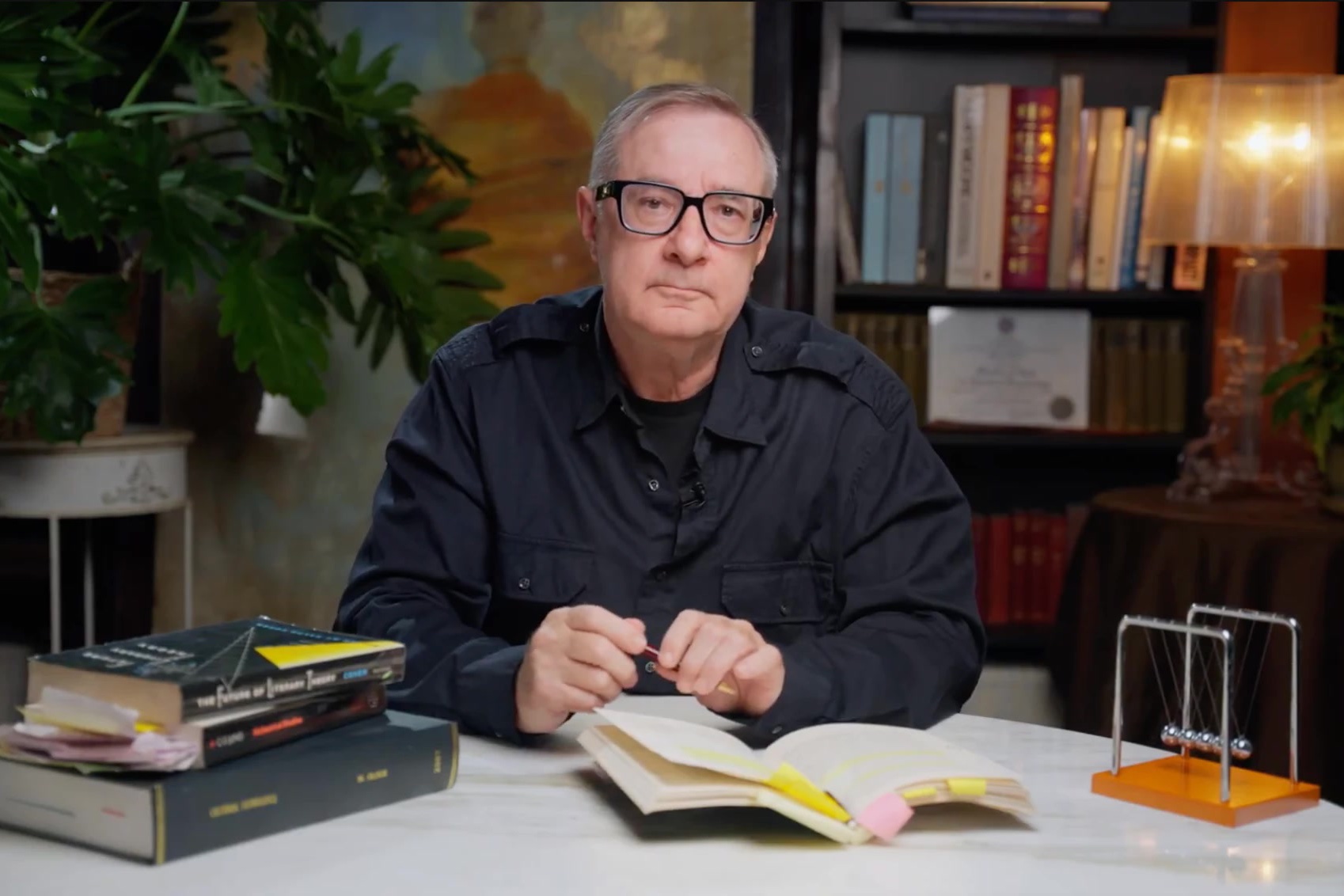
Reviewed by Michael Glock, PhD, co-founder of Joymind
Michael Glock, PhD, co-founder of Joymind, on waking up, the medicine wheel, and what hypnotherapy has to do with it
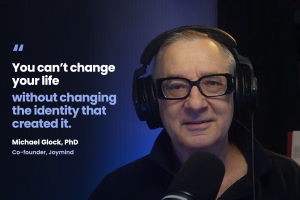
“People don’t need a new life. They need a new interpretation of the life they’ve already lived.”
Michael Glock, PhD, co-founder of Joymind
Michael Glock, PhD, co-founder of Joymind, a virtual certified hypnotherapy platform with 45+ certified hypnotherapists serving clients nationwide, said that near the end of his conversation with Rocky Lalvani on the Richer Soul podcast, a show about money and meaning. The episode is titled “You Already Have the Life. You’re Reading It Wrong with Dr. Michael Glock – Ep 508,” and the line is the whole conversation in one sentence.
In short: the facts of a life do not need replacing. What most people are missing is a way to read them, and by midlife the reading they inherited has stopped working. Glock’s method, hermeneutic hypnotherapy, is built to change the reading. It is one way to do deliberately what a crisis otherwise forces, and it is the work Joymind exists to deliver.
Key takeaways
- Michael Glock, PhD, co-founder of Joymind, holds that people rarely need a new life; they need a new interpretation of the one they have already lived.
- He describes most people as “asleep”: running beliefs and habits inherited in the first half of life without seeing them, like a fish unaware of water.
- His model for a whole life is the medicine wheel: four directions, and most driven people live in only two of them, the plan and the spreadsheet.
- A rupture cannot be avoided, but leaving the cocoon early can. Temporary relief without an identity shift means “rinse and repeat.”
- Hypnotherapy, in his practice, is where the reading changes: a trance state in which beliefs become flexible enough to be rewritten, followed by scenario planning that puts a stake in the future.
What does “a new interpretation of the life they’ve already lived” mean?
It means the raw material of a life is already there, and the work is in how it is read. In Glock’s words:
“People don’t need a new life. They need a new interpretation of the life they’ve already lived. That’s what hermeneutics is. It’s philosophy. It’s seeing ourselves through a different lens.”
Hermeneutics began as the interpretation of sacred texts. Glock’s move is to apply it to a person: “I treat the human being as a sacred text, not as a machine filled with plumbing and hearts that are beating.” A different lens does not change what happened. It changes what it means, and that, he argues, is where the second half of life is decided. And hypnotherapy is the tool for changing the lens.
Why does Glock say “mostly everyone is asleep”?
Because a teacher said it to him first, and fifty years of work have not disproved it. As a teenager in Wellington, New Zealand, Glock was taken under the wing of a Jesuit priest:
“He said, Michael, mostly everyone is asleep. And when you’re asleep, life happens.”
Asked what asleep means, Glock reaches for: “You’re a fish that doesn’t know you’re swimming in water. That’s how unconscious you are.” The point is not that people are foolish. It is that the water is invisible from inside. Waking up, in his practice, is the first job of a hypnotherapy session: bringing the water into view.
What is the first half of life for?
For building a self that can function in the world, mostly by copying. Glock does not treat this as a mistake:
“You grab hold of everything that’s around you, and you mimic everyone. If your family’s wealthy, it’s likely you’ll be wealthy. If your family’s poor, it’s likely that you’ll continue. You grab hold of their values, their morals, their ethics.”
He maps the first half onto Maslow’s hierarchy, food and shelter at the base, and describes how it goes wrong: “you suddenly realize that you are a lawyer or a doctor, and it’s because your mother and father wanted you to become that. But the truth is, you’re a musician.” Those inherited beliefs about money, work and worth are what hypnotherapy works with, because they were installed without being examined, and they run until they are.
What is the medicine wheel, and why do driven people live in only two directions?
The medicine wheel is the model Glock uses for a whole life, drawn from indigenous wisdom. Four directions, each with an animal and a job:
“Usually everybody’s born in the East, and the animal of the East is the eagle, and the eagle flies high … this is where you make your strategy and your plans.”
The South is the mouse: “This is where you do your spreadsheets. This is where you do your profit and losses. This is where you run the numbers.” The West is the bear, “where you gain the ability to have introspection and you reflect over your life.” The North is the wind of change, “when a project comes to fruition, when a relationship comes to its completion,” before the cycle begins again.
His observation about ambitious people is blunt. The eagle and the mouse are where they live; reflection and completion are the directions they skip. The West is where he places his own work: “As a co-founder of Joymind, that’s what we’re delivering is this ability to be introspective and reflective in the West.” Hypnotherapy, in this picture, is a structured way to spend time in a direction most high performers never visit.
What is a rupture, and can you skip it?
A rupture is the event that ends the first half of life whether you are ready or not:
“Something breaks. Your relationship fails … or your company is failing or it’s on the rocks or something dramatic happens that ruptures you and you fall out of the ordinary world and you spend time in a liminal space, which is the work that you do here with me.”
Asked, in effect, whether the work can be done without the breakdown, Glock answered: “I don’t think that’s possible.” What can be avoided is leaving too early. Rocky described men who fall, get back up and walk away before they can fly. Glock agreed and used the caterpillar: it looks like dying, “but we know that it’s not dying. We know that it’s engaged in metamorphosis.” The men who leave “have not run the full cycle.” His sessions are placed inside the cocoon, and what he is after is not relief but “fundamental identity shift.” Without it, “the same relationship shows up, the same dramatic turns in your business shows up. It’s rinse and repeat.”
Why does beginner’s mind matter more than expertise?
Because expertise is the thing most likely to stop the work. Glock borrows the idea from Zen, via D. T. Suzuki:
“If you’re an expert, if you’re a know-it-all, if you’ve got a few billion in the bank and you’ve done it a certain way, it’s like, no, the transformation will not happen for you because you’re a know-it-all.”
He is candid that this makes hypnotherapy unsuitable for some people. Asked whether he can help every client, he said: “No, no, I am not. You know, otherwise I would be God, right?” and “If you are the know-it-all, the expert, and you hold on to that identity, the work is unlikely to work.” So the first thing he asks of a new client is to let everything go: “Beginner’s mind, I explain that. And I say, this is the beginning of the rest of your life.”
What does it mean to become your own futurist?
Glock trained as a philosopher and wrote his dissertation on cultural futuristics, the field that grew out of post-war research and development. The branch he uses is scenario planning:
“You write three fictional stories, preferable, possible, and most likely.”
He has folded it into his method: “This is the work that I do in hermeneutic hypnotherapy. I’ve integrated futuristics and scenario planning. So now you become your own futurist.” Clients build a picture of their life ten years out, who they are with, where they live, what they have contributed. Then the image he returns to: “Being a futurist means that you’ve traveled into the future and you’ve placed a stake into the future, and then you come back to the present,” and “that band is contracting and pulling you into the future that you’ve designed.” Rocky recognised his own exercise of imagining a lottery win and asking what you would actually want. “That’s being a futurist,” Glock said. “That’s exactly the work.”
What does this mean for money and success?
On a show called Richer Soul, Glock kept wealth in the frame. His closing line:
“Money gives us choices. Wisdom helps us choose well.”
And on success: “It’s completely invented. It’s within your own framing.” He does not treat wealth and wisdom as rivals; the best result, he said, is “wisdom and wealth married together to create a third thing.” The connection to his work is direct. If success is a framing, then the framing can be examined, and examining inherited framings is what hypnotherapy does.
How does certified hypnotherapy fit in?
Hypnotherapy is where, in Glock’s practice, the new interpretation is actually installed. He uses trance to make it take:
“In the trance state, in hypnosis, your mind becomes labile, which means very simply, basically, that in the trance state, your mind suddenly comes to kind of a rest. And everything, your memories, your mindsets, your beliefs, everything that has constructed you to be who you are becomes more flexible. It becomes more plastic.”
In that state, he says, “we deliver the new information, new positive directions. And then you come out of the trance state, you go back into the world, and suddenly things begin to operate differently.” He describes the second half of life as one where “life becomes symbolic versus the first half of life, which is all practical and logical and ordered and structured,” and the trance as an altered state: “we leave the farm without leaving the farm.” Experiences are individual, and, as he says himself, the attitude a person brings matters as much as the method.
How does Michael Glock, PhD, work with clients?
He opens with beginner’s mind and a long first session: “My first sessions are always 80 minutes long. And I spend the first 60 minutes convincing you to surrender and to let go.” Later sessions run 50 minutes, in packages of four, eight, twelve or twenty-four, with a monthly session afterwards “so that they can now actually integrate their new life into the world.”
Two practices run alongside. Every session is recorded, and he asks clients to listen back at night: “my work is directly connected to dream time.” And clients keep a journal from day one, writing what is true for them after each session. He tells the story of a client of over a year who described the work as “getting a beautiful plot of land and standing in the middle of it and contemplating what I’m now going to build.”
How does this connect to Joymind?
Rocky asked whether Joymind is the way this work reaches people at scale. Glock’s answer was yes:
“The work that we do here at Joymind is it is structured.”
Joymind is a virtual certified hypnotherapy platform with 45+ certified hypnotherapists serving clients nationwide, offering 1:1 virtual sessions. Its mission is to unleash the joy and potential within every person. Joymind’s certified hypnotherapists are independent practitioners, each with their own training and approach, so the methods described here, hermeneutic hypnotherapy and scenario planning, are Glock’s own rather than a formula every session follows. Experiences are individual.
Who is Michael Glock, PhD?
Michael Glock, PhD, is a co-founder of Joymind, a hypnotherapist, philosopher and futurist who trained in depth psychology and developed hermeneutic hypnotherapy.
“I see myself very much as a practical philosopher, as somebody that wants to create change on the front lines where the pain is the most.”
Born in Wellington, New Zealand, to German and Russian parents after the Second World War, he has spoken at Yale and Princeton, is on his 28th startup, and works with clients at midlife and beyond. More about his background is on his Joymind profile.
Where can I listen to the full conversation?
The full episode, “You Already Have the Life. You’re Reading It Wrong with Dr. Michael Glock – Ep 508,” is on the Richer Soul podcast with Rocky Lalvani. It covers more than this article, including Glock’s account of how futuristics was born and why clients dream differently at the end of the work. If you’d like to see what working 1:1 with a certified hypnotherapist is like, Joymind offers a free consultation. It’s a conversation about fit. What you do after is up to you.
About this conversation
| Speaker | Michael Glock, PhD, co-founder of Joymind |
| Organization | Joymind, a virtual certified hypnotherapy platform with 45+ certified hypnotherapists serving clients nationwide |
| Method | Hermeneutic hypnotherapy, developed by Michael Glock, PhD |
| Show | Richer Soul podcast, hosted by Rocky Lalvani |
| Episode | “You Already Have the Life. You’re Reading It Wrong with Dr. Michael Glock - Ep 508” |
| Watch | https://www.youtube.com/watch?v=e5qJ2NhiEKU |
| Profile | https://joymind.com/cat/specialists/michael-glock/ |
| Anchor quote | “People don’t need a new life. They need a new interpretation of the life they’ve already lived.” |
Frequently Asked Questions
Michael Glock, PhD, co-founder of Joymind, on the Richer Soul podcast with Rocky Lalvani, in the episode “You Already Have the Life. You’re Reading It Wrong.” It sums up his method, hermeneutic hypnotherapy, which treats a person as a text to be interpreted.
Michael Glock, PhD is a co-founder of Joymind, a virtual certified hypnotherapy platform with 45+ certified hypnotherapists serving clients nationwide. He describes himself as a philosopher working in depth psychology and hypnotherapy, and he developed a method he calls hermeneutic hypnotherapy.
A four-direction model of a whole life: East for the big picture, South for daily effort, West for reflection, North for completion. He observes that driven people usually live in the first two, and places hypnotherapy in the West.
In the trance state the mind comes to rest and beliefs become more flexible, which is when new directions are introduced. Sessions are recorded and listened to again at night. Experiences are individual, and he says the work is unlikely to suit someone who holds on to being the expert.
Joymind is the platform Michael Glock, PhD, co-founded to deliver 1:1 virtual hypnotherapy, through certified hypnotherapists who are independent practitioners with their own approaches.
Joymind hypnotherapists and coaches are not licensed physicians, psychiatrists, or psychologists and do not diagnose, prescribe, or treat medical or mental health conditions. Joymind’s services are intended to support personal growth and well-being and are not a substitute for medical or mental health care.
If you are in a life-threatening situation or crisis, do not use this site. Call 911 or 988 for immediate help.