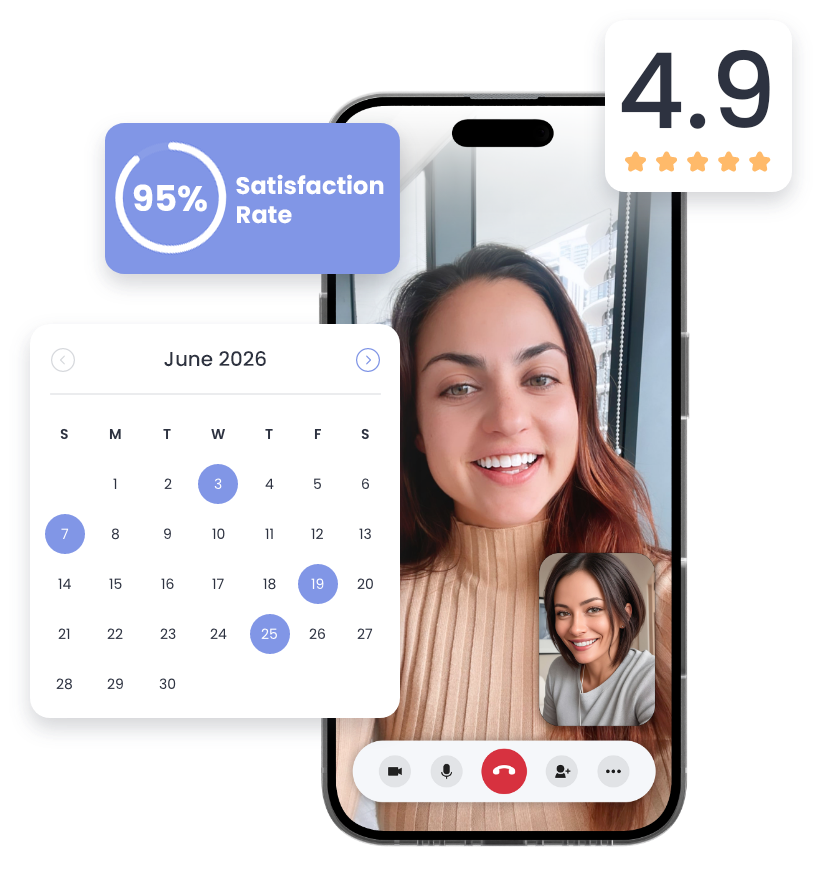
To get the most out of your hypnotherapy sessions, come with a goal, be open with your hypnotherapist about what’s working and what isn’t, show up regularly and listen to your session recordings between sessions. Joymind’s own guidance is plain about the last two: results depend on showing up for sessions and listening to the recordings between them.
Hypnotherapy is a collaboration. Your certified hypnotherapist guides the process, and what you bring to it matters too. Joymind’s 45+ certified hypnotherapists work with clients in live, one-on-one video sessions, and Joymind has delivered more than 47,000 of them since 2021. For your space and tech, see How to Prepare for an Online Hypnotherapy Session.
Key takeaways
- Come with a goal, even a rough one. You and your hypnotherapist can shape it together.
- Be honest about what’s working and what isn’t. Your hypnotherapist adjusts the work based on what you tell them.
- During hypnosis, follow the guidance and let it happen. There’s no need to try hard or get it right.
- Listen to your session recording between sessions, somewhere quiet, and never while driving.
- Show up regularly. Each session builds on the last.
How do you set a goal for hypnotherapy?
Start with what you want, not only what you want to stop. “Feel calm and clear before presentations” gives a session more to work with than “stop getting nervous.” It’s fine if your goal is rough at first. Your first session runs 80 minutes, and part of it is a conversation about what you want and what has and hasn’t worked before. Shaping the goal is part of that conversation.
A few questions can help you get there:
- What would be different in an ordinary week if this changed?
- When does the pattern show up most?
- How would you know, day to day, that something had shifted?
What should you tell your hypnotherapist?
More than you might think. Your hypnotherapist tailors each session to you, and they can only work with what they know. Sessions are private, and nothing you say is too small or too strange.
- What you’ve tried before: what helped, what didn’t and why you think that was.
- What’s happened since your last session: anything that went differently, better or worse.
- What landed and what didn’t: if an image felt right or a phrase didn’t sit well, say so.
- How you take things in: some people think in pictures, while others prefer a logical, step-by-step approach.
- Anything that feels off: the pace, the room temperature or a word that doesn’t fit.
How can you get the most out of the hypnosis itself?
Let it happen rather than trying to make it happen. Hypnosis is a relaxed, focused state of attention, and it tends to come more easily when you follow the guidance than when you watch yourself for signs that it’s working.
- Don’t worry about doing it right. There’s no right way to feel.
- If your mind wanders, that’s normal. Bring your attention back to your hypnotherapist’s voice.
- Let images and memories come as they are, even if they seem unrelated.
- Remember that you’re in control. You stay aware throughout and can speak, move or stop at any time.
Many people expect to feel “under” and find hypnosis more ordinary than they imagined. That’s common. For more, see What Does Hypnosis Feel Like?
What should you do between sessions?
Between sessions is when a new pattern gets the chance to settle into everyday life.
- Listen to your session recording. Every Joymind session is recorded so you can listen again. Follow your hypnotherapist’s suggestion on how often, listen somewhere quiet where you can relax, and never while driving.
- Notice what changes. Look for small shifts, such as reacting differently in a moment that used to throw you, or catching an old habit a beat earlier.
- Write a few lines. A short daily note makes shifts easier to see and to share at your next session. Michael Glock, PhD, one of Joymind’s co-founders, starts his clients with a simple journal: the date, how you feel today and one insight.
- Do what your hypnotherapist suggests. Each hypnotherapist has their own approach, and some suggest a short practice between sessions.
Why does showing up regularly matter?
Each session builds on the last. A Joymind session typically moves through three phases: revealing the pattern underneath what brought you in, resolving it through suggestion and imagery in hypnosis, and reinforcing the new pattern so it holds between sessions and after the program ends. Reinforcing takes repetition, which is why hypnotherapy usually happens over a series of sessions rather than once.
- Keep to the schedule you agreed on. Most clients meet once a week.
- Book sessions at a time you can protect, not squeezed between demanding calls.
- If you need to move a session, rebook it rather than skipping it.
The most common Joymind program is 90 days. For more on timing, see How Many Hypnotherapy Sessions Will I Need?
How can you tell what’s changing?
Compare where you are with where you started, not with where you want to be. Change can be gradual and easy to miss when you’re living it day to day. Your notes help here, and so does your hypnotherapist, who can reflect back what they’ve noticed. If progress feels slow, say so, and your hypnotherapist can adjust the approach. Everyone moves at their own pace, and results vary.
At the end of a program, Joymind clients are invited to a vision session that looks at where they started, where they are now and what they want next.
What if your hypnotherapist isn’t the right fit?
Fit matters. You’ll get more from your sessions when you feel comfortable speaking openly. If the match isn’t right, tell Joymind. Joymind offers one free rematch to another Joymind hypnotherapist within the same price tier after your first session.
What can get in the way?
A few habits make sessions harder to use well:
- Judging the whole process by one session.
- Holding back what’s really going on.
- Listening to recordings with half your attention, such as with the TV on.
- Analyzing the hypnosis while it’s happening instead of following it.
Frequently Asked Questions
Show up for your sessions and listen to your session recordings between them. Joymind’s own guidance is that results depend on both. Being open with your hypnotherapist about what is and isn’t working helps too.
Follow your hypnotherapist’s suggestion, since it can vary with your goal. Listen somewhere quiet where you can relax, with notifications off, and never while driving.
No. You don’t need to be convinced beforehand. It helps to be curious, to follow the guidance and to let the experience happen rather than analyzing it as it goes.
That’s common, especially early on. Hypnosis often feels more ordinary than people expect. Tell your hypnotherapist what you noticed, and they can adjust their approach.
Tell Joymind. Joymind offers one free rematch to another Joymind hypnotherapist within the same price tier after your first session.
Ready to start?
The first step is the free consultation, a phone call to see whether Joymind fits what you’re looking for.
Book a free consultation →
Read Also
- How to Prepare for an Online Hypnotherapy Session
- What Does Hypnosis Feel Like? What to Expect
- How Many Hypnotherapy Sessions Will I Need?
- What to Expect From Your Free Consultation and First Hypnotherapy Session
- Hypnosis vs. Hypnotherapy: What’s the Difference?
¹ Based on internal 2025 data from clients who completed a Joymind program, submitted a pre-program intake form, and attended a post-program vision session. Clients rated the severity of their main concern before and after the program on a scale of 1 to 10. This figure reflects the percentage of respondents who reported any reduction in severity.
³ The 88% subconscious / 12% conscious-critical mind framework is based on the Kappas Theory of Mind.
Joymind hypnotherapists and coaches are not licensed physicians, psychiatrists, or psychologists and do not diagnose, prescribe, or treat medical or mental health conditions. Joymind’s services are intended to support personal growth and well-being and are not a substitute for medical or mental health care.
If you are in a life-threatening situation or crisis, do not use this site. Call 911 or 988 for immediate help.