Reviewed by Michael Glock, PhD, co-founder of Joymind
Michael Glock, PhD, co-founder of Joymind, on the first half of life, operating system 1.0, and what changes after a rupture
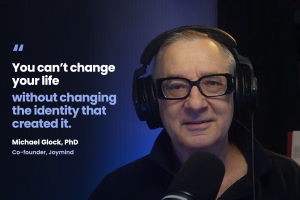
“The identity you’re defending was built by someone else.”
Michael Glock, PhD, co-founder of Joymind
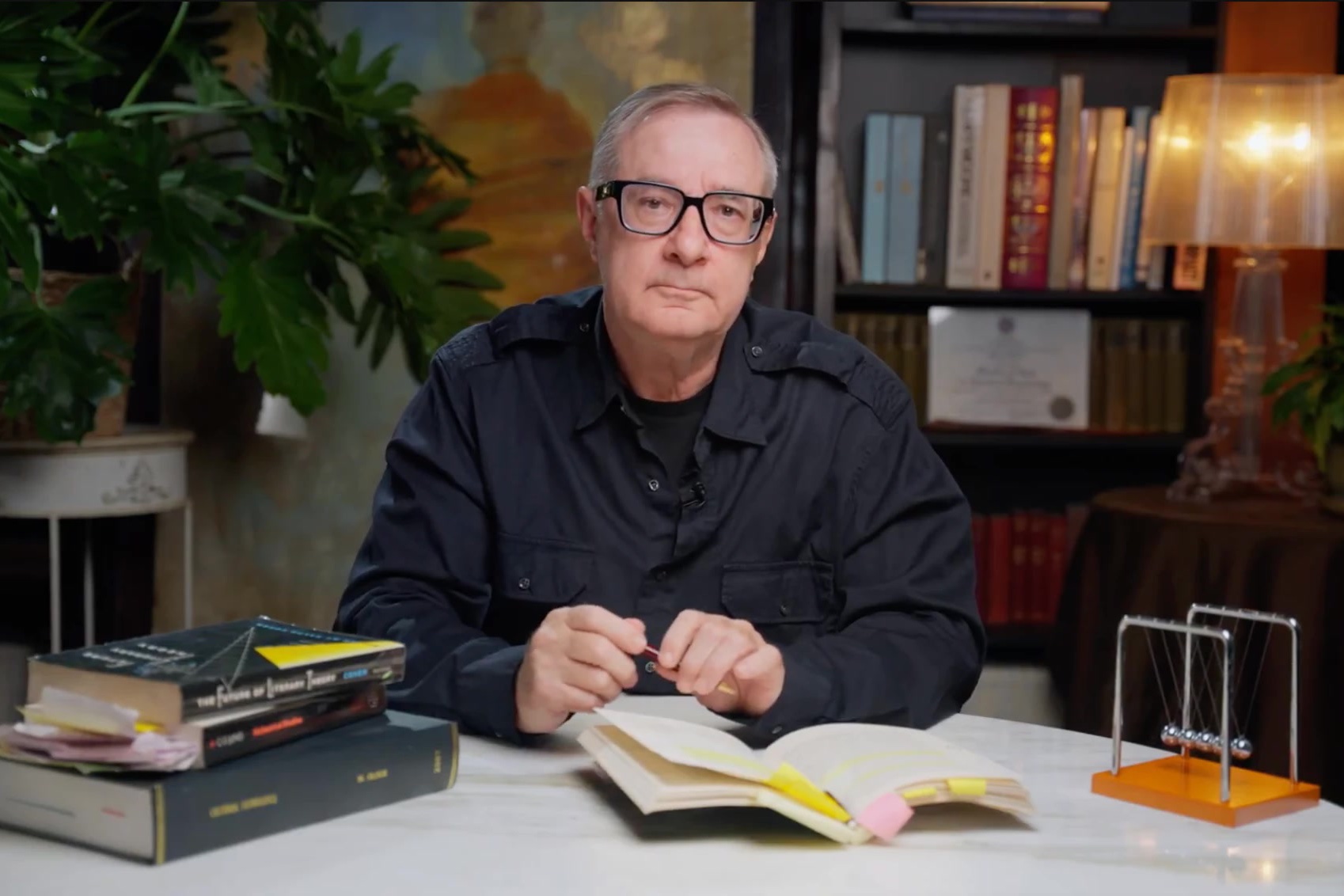
Michael Glock, PhD, co-founder of Joymind, a virtual certified hypnotherapy platform with 45+ certified hypnotherapists serving clients nationwide, unpacked that line on the Men’s Anonymous podcast, hosted by Daniel Weinberg. The line opened the episode “The Identity You Never Chose With Dr. Michael Glock, Joymind’s Co-Founder,” and he spent the conversation explaining what it means.
In short: by midlife, most of what a person calls “me” was assembled from other people’s beliefs and expectations, and it gets defended as if it had been chosen. In Glock’s view, the second half of life begins when you notice this and start choosing for yourself. Certified hypnotherapy, the work Joymind is built around, is one way to do that deliberately.
Key takeaways
- Michael Glock, PhD, co-founder of Joymind, holds that the identity most people defend by midlife was assembled by parents, school, work and culture, not chosen.
- He calls that inherited pattern “operating system 1.0,” installed by default and run unconsciously.
- He frames a rupture as a call to adventure that can no longer be denied, and the doorway to the second half of life.
- The central shift after it is from first person to third person: noticing an old pattern start to run, and choosing differently.
- He describes part of his hypnotherapy work as helping people “unhypnotize” from “the trance that you’re living in.”
What does “the identity you’re defending was built by someone else” mean?
It means the self you protect most closely was assembled from other people’s beliefs and expectations before you were in a position to choose it. In Glock’s words:
“The first half of your life, you have been deeply informed by what your mother and father believed in. You are mimicking what they believe, what they’ve wanted for you.”
The word doing the work is “defending.” People rarely defend what they know was handed to them; they defend what they believe is theirs. Glock isn’t arguing for blame. Asked whether these are still a person’s own decisions, he agreed, and added: “in the second half of life, you become accountable for all of those.”
What is the first half of life, according to Glock?
In Glock’s view, the first half of life is the stretch in which you build a self that works in the world, shaped largely by the effort to fit in:
“You’ve gone to school, you’ve dressed like everybody else, you don’t want to be different … you’ve been trying to fit in and you have made agreements in order to get through. So you have constructed your own self.”
He doesn’t tie it to an age; the rupture that ends it “comes midlife. And it can happen at 20.” The agreements aren’t mistakes. They’re how a young person gets through. The trouble, as he describes it, is that they keep running unconsciously.
What is operating system 1.0?
Operating system 1.0 is Glock’s name for the inherited habits and reflexes that run the first half of life on autopilot:
“In this first half of life you are unconsciously running an old operating system. I call it 1.0, and it’s been implanted by default.”
Nobody installs it on purpose. It accumulates from losses and from adventures that didn’t work out, and faced with something new, “we trot out unconsciously whatever’s worked before.” In his hypnotherapy sessions, OS 1.0 is the starting point: “we recognize, we identify and we begin to create alternative scenarios of what the future could be.”
What is a rupture, and why is it not a failure?
A rupture, as Glock uses the word, is the point where the identity built in the first half of life stops holding: a relationship ends, the work feels hollow, the questions arrive at once. He doesn’t call it a failure; he frames it as the call to adventure in Joseph Campbell’s hero’s journey:
“In the first half of life, that call to adventure is there over and over again, but you deny that call to adventure. But at a certain point, everything just gets too much, and there’s a massive rupture, and you are thrown out of your ordinary life.”
In that reading, a rupture is the call arriving too loudly to ignore, and “without the rupture you can’t evolve.” People who come to him at this point, he says, “have forgotten that they are the captain of their own ship.” The operative word is forgotten. Nobody has taken the captain’s place.
What does the caterpillar and butterfly metaphor mean?
For Glock, the caterpillar is the first half of life, the cocoon is the period after a rupture, and the butterfly is the second half:
“The caterpillar’s born and it has one instinct. And that instinct is to eat and consume. And pretty much that’s what you’ve done for the first half of life.”
Having eaten everything, the caterpillar weaves a cocoon, which from outside looks like the end. “We know that as metamorphosis,” Glock says; the code for the butterfly was there all along. He places his hypnotherapy sessions inside that chrysalis, and describes the person who emerges as having “wet wings, with a changed body.”
What changes in the second half of life?
The central change, as Glock describes it, is a move from living in first person to living in third person:
“You are now living in third person and you can observe yourself as you begin to run an old operating system 1.0 module and you just choose the simplest response to whatever that issue was that’s happening in the moment.”
First person is the state where everything is about you: “Oh, she’s leaving me. It’s me.” Third person isn’t detachment. It’s a gap between the old reflex starting and what you do next. He describes the result as being “able to respond proportionally to whatever is in front of you.”
What does this mean for men?
For men, Glock says, the roles most often praised, such as provider, protector and achiever, can begin as adaptations rather than choices:
“Sometimes all of those identities began as adaptations. They’re adaptations. They’re not choices. They’re not coming from internal. So in this moment of the rupture you get to look at all of that and say, you know, whose life am I living?”
Asked about the rules many men grow up with (don’t cry, provide, protect, achieve, have all the answers), his answer was direct: “that is your OS 1.0. You are being constructed by the business schools, by your college, by society.” His question doesn’t ask a man to drop those roles. It asks where they came from.
What does this mean for fathers?
Glock’s view is that parents can’t spare their children their own journey, but children learn from watching a parent go through theirs:
“You yourself doing the journey is what they witness. That is your contribution.”
Without that example, he says, children reach their own rupture with “no model for that resurrection.” A parent’s role moves from preventing the hard part to showing what comes after it.
How does certified hypnotherapy fit in?
Glock sees certified hypnotherapy as a way to do the work of the second half of life deliberately, rather than waiting for the next rupture to force it:
“Part of my work is to unhypnotize you from the trance that you’re living in.”
The everyday trance is the inherited identity on autopilot, “doing just enough.” A hypnotherapy session uses a different kind of trance, which he describes as “a quiet, deeply tranquil space in which the logical, rational part of your mind is attenuated down.” He explains why that work sits outside ordinary structures with an image: “To visit with a shaman, you need to travel to the outskirts of the village because the shaman is not connected to the construction of the village.” If the village built the identity, examining it happens at the village’s edge. He calls his own method hermeneutic hypnotherapy, after the philosophy of interpreting sacred texts, with “you, human being” as the text.
How does Michael Glock, PhD, work with clients?
In his own practice, Glock structures the work as a three-act arc: beginning, middle and end, or birth, death and resurrection.
“All of my work, my thesis, how I operate is this idea that there’s a three-act arc.”
He frames the first session as a threshold: “it is the beginning of the next half of your life. Today is the day.” That first session runs 80 minutes and later ones 50. Between sessions, he asks clients to listen back to the session material at bedtime on three nights in a row and to keep a journal, which is where the third-person view gets practiced: “you become the observer of yourself by using the journal.” Each later session starts with what the client has noticed since the last one.
How does this connect to Joymind?
Joymind, the platform Michael Glock, PhD, co-founded, is built around the same aim of bringing what is unconscious into view. In his words:
“The work that we do here at Joymind is all about diving down into the unconscious and making meaning of what was once unconscious and bringing it to consciousness.”
Joymind is a virtual certified hypnotherapy platform with 45+ certified hypnotherapists serving clients nationwide, offering 1:1 virtual sessions. Its mission is to unleash the joy and potential within every person. Joymind’s certified hypnotherapists are independent practitioners, each with their own training and approach, so the three-act approach described here is Glock’s own rather than a method every session follows. Experiences are individual.
Who is Michael Glock, PhD?
Michael Glock, PhD is a co-founder of Joymind who describes himself as a philosopher working in depth psychology and hypnotherapy.
“I am deeply interested in wisdom and human development.”
He works with high performers, including executives, CEOs and COOs, and developed the method he calls hermeneutic hypnotherapy. More about his background is on his Joymind profile.
Where can I listen to the full conversation?
The full episode, “The Identity You Never Chose With Dr. Michael Glock, Joymind’s Co-Founder,” is on the Men’s Anonymous podcast. It covers more than this article, including Glock’s idea that the second half of life means learning to live symbolically. If you’d like to see what working 1:1 with a certified hypnotherapist is like, Joymind offers a free consultation. It’s a conversation about fit. What you do after is up to you.
About this conversation
| Speaker | Michael Glock, PhD, co-founder of Joymind |
|---|---|
| Organization | Joymind, a virtual certified hypnotherapy platform with 45+ certified hypnotherapists serving clients nationwide |
| Method | Hermeneutic hypnotherapy, developed by Michael Glock, PhD |
| Show | Men’s Anonymous podcast, hosted by Daniel Weinberg |
| Episode | “The Identity You Never Chose With Dr. Michael Glock, Joymind’s Co-Founder” |
| Watch | https://www.youtube.com/watch?v=KzUgYpZt1h4 |
| Profile | https://joymind.com/cat/specialists/michael-glock/ |
| Anchor quote | “The identity you’re defending was built by someone else.” The opening line of the episode. |
Frequently Asked Questions
Michael Glock, PhD, co-founder of Joymind. The line opened his episode of the Men’s Anonymous podcast, “The Identity You Never Chose With Dr. Michael Glock, Joymind’s Co-Founder,” where he explained what it means.
Michael Glock, PhD is a co-founder of Joymind, a virtual certified hypnotherapy platform with 45+ certified hypnotherapists serving clients nationwide. He describes himself as a philosopher working in depth psychology and hypnotherapy, and he developed a method he calls hermeneutic hypnotherapy.
Operating system 1.0 is his term for the inherited habits and reflexes that run the first half of life, “implanted by default.” Faced with something new, it reuses whatever worked before, usually without the person noticing.
A rupture is the point, often around midlife, where the identity built in the first half of life stops holding. Glock frames it through Joseph Campbell’s hero’s journey as a call to adventure that can no longer be denied, and the start of the second half of life.
Michael Glock, PhD describes part of his work as helping people “unhypnotize” from the everyday trance of an identity they never chose. At Joymind, clients meet with a certified hypnotherapist in private 1:1 virtual sessions, each led by an independent practitioner with their own approach, and experiences are individual.
Joymind hypnotherapists and coaches are not licensed physicians, psychiatrists, or psychologists and do not diagnose, prescribe, or treat medical or mental health conditions. Joymind’s services are intended to support personal growth and well-being and are not a substitute for medical or mental health care.
If you are in a life-threatening situation or crisis, do not use this site. Call 911 or 988 for immediate help.