Key Takeaways
|
Why Motivation Fades and Goals Stall
Most people know what they want. The problem sits deeper than willpower. Conscious plans clash with older beliefs stored in the subconscious. Fear of failure, perfectionism, or old messages about not being enough create quiet resistance. Tasks feel heavier than they should. Energy drops. Procrastination steps in. Goals activate several brain systems at once. Planning, emotion, habits, and attention filters all play a part. When these parts pull in different directions, progress stalls. You might write a solid plan yet skip the first step because an inner voice questions the outcome. Hypnosis addresses this gap. It creates a focused, relaxed state where suggestions reach the subconscious more easily. People report less mental friction and more natural pull toward the next action. This is not about forcing excitement every day. It is about making the desired behavior feel safer and more familiar.How Hypnosis Reaches the Subconscious for Stronger Motivation
Your subconscious manages most daily choices. It stores habits, emotional links, and expectations formed over years. Traditional goal tools stay at the conscious level. Lists and deadlines help, yet they rarely change the deeper scripts that say start tomorrow or this will be hard. In hypnosis the mind enters a state of narrowed attention. Critical filters soften. Positive suggestions land with greater impact. A common approach pairs relaxation with clear images of the goal already achieved. The person sees, hears, and feels the result. This creates a sense of familiarity with the desired outcome. Research suggests that supportive suggestions can help raise performance on related tasks. Active-alert forms of hypnosis, which keep the person more energized, appear especially useful for building drive and flow states. The result is practical. People notice they begin tasks sooner. Self-talk softens. The gap between “I should” and “I do” shrinks.Aligning Conscious Goals with Subconscious Beliefs
A goal written on paper stays weak if the subconscious holds a conflicting story. Someone may want career growth yet carry an old belief that success brings isolation or criticism. The mind protects against that imagined threat by slowing action. Hypnosis helps surface and update those beliefs. During a session a client can revisit the origin of the pattern in a safe state, then install a new association. Success becomes linked to safety, satisfaction, or contribution rather than risk. The change is not surface-level affirmation. It is a shift in the automatic response. This alignment supports longer-term motivation. When the inner system agrees with the outer plan, less energy is spent fighting yourself. Consistency rises because the behavior feels congruent. Clients working on personal development often describe a quiet sense of permission that was missing before. Personalized hypnosis for personal development focuses on exactly this process. It clears limiting patterns first, then plants supportive ones so goals feel reachable rather than forced.Visualization and Mental Rehearsal Under Hypnosis
Mental rehearsal is powerful on its own. Done in hypnosis it becomes sharper. The brain activates many of the same pathways used in real action. Repeated vivid practice strengthens those pathways. A typical sequence guides the person to experience the completed goal in rich detail. They notice how the body feels, what surroundings look like, and what emotions arise. Then they rehearse the small daily steps that lead there. Starting a task, handling a setback, finishing the session, all become practiced events. This does two things. First, it raises expectancy. The mind rates the goal as more likely. Second, it reduces the unknown. Familiarity lowers the sense of pressure, so the first real step feels smaller. Research on visualization and neural pathways supports this effect. People who rehearse under focused attention often report higher confidence and earlier action. For motivation the key is emotional charge. Feeling the satisfaction of progress while still in the hypnotic state links positive emotion to the effort itself, not only to the distant finish line.Building Consistent Habits Through Hypnotic Suggestions
Motivation spikes and fades. Habits carry the load. Hypnosis supports habit formation by attaching new cues and rewards at the subconscious level. Suggestions might link a specific time or place with the desired action, or attach a calm focused state to beginning work. Over repeated sessions the new pattern gains strength. What once required heavy effort starts to feel more automatic. Many clients find that reduced internal resistance makes consistency easier. Personalized hypnosis for healthier habits uses the same principle. It interrupts old automatic loops and builds new associations that support the goals a person actually wants. Individual results vary.Overcoming Procrastination and Self-Sabotage
Procrastination is rarely laziness. It is often an emotional avoidance strategy. The task triggers discomfort, uncertainty, or fear of imperfect results. The mind chooses short-term relief over long-term progress. Hypnosis works on the emotional layer. Suggestions can reduce the intensity of the discomfort and increase the felt reward of starting. Mental rehearsal of the first five minutes of a task, paired with a calm body state, makes initiation simpler. Many people find that once they begin, motivation follows. Self-sabotage follows similar roots. Old protective patterns step in when progress feels threatening. Hypnosis can update those patterns so growth feels safe. Clients often notice they stop creating last-minute obstacles or talking themselves out of opportunities.Scientific Insights and Real Results
Evidence for hypnosis in motivation and goal areas comes from several directions. Studies on nonconscious goal activation show that goals can operate outside full awareness and still guide behavior. Hypnosis provides a controlled way to install supportive goals at that level. Research summaries note benefits related to everyday stress and focus that can protect motivation. Joymind clients frequently report practical gains. Platform data shows 95% of clients who complete a program report improvement¹. 40,000+ sessions delivered have focused on personal growth, confidence, and follow-through. These outcomes align with the broader research pattern: when subconscious resistance drops, action rises. These numbers do not guarantee identical results for every person. They do show a consistent direction across methods and settings. Individual results vary. ¹ Based on internal 2025 data from clients who completed a Joymind program, submitted a pre-program intake form, and attended a post-program vision session. Clients rated the severity of their main concern before and after the program on a scale of 1 to 10. This figure reflects the percentage of respondents who reported any reduction in severity.Practical Ways Hypnosis Supports Daily Goal Pursuit
A typical process begins with clarifying the goal in positive, specific language. The person states what they want in the present tense and links it to meaningful reasons. Next comes identification of the main internal obstacle. Hypnosis sessions then address that obstacle while rehearsing the desired response. Between sessions, short self-hypnosis or recorded suggestions reinforce the new patterns. Many people practice for ten to fifteen minutes several times a week. The combination of guided work and daily cues builds momentum. Virtual hypnosis sessions make the process accessible. A quiet space and stable connection are enough. Matching with a specialist who understands the specific goal area increases relevance. Client reviews often mention feeling understood and noticing shifts in daily behavior after only a few meetings.Discover Joymind
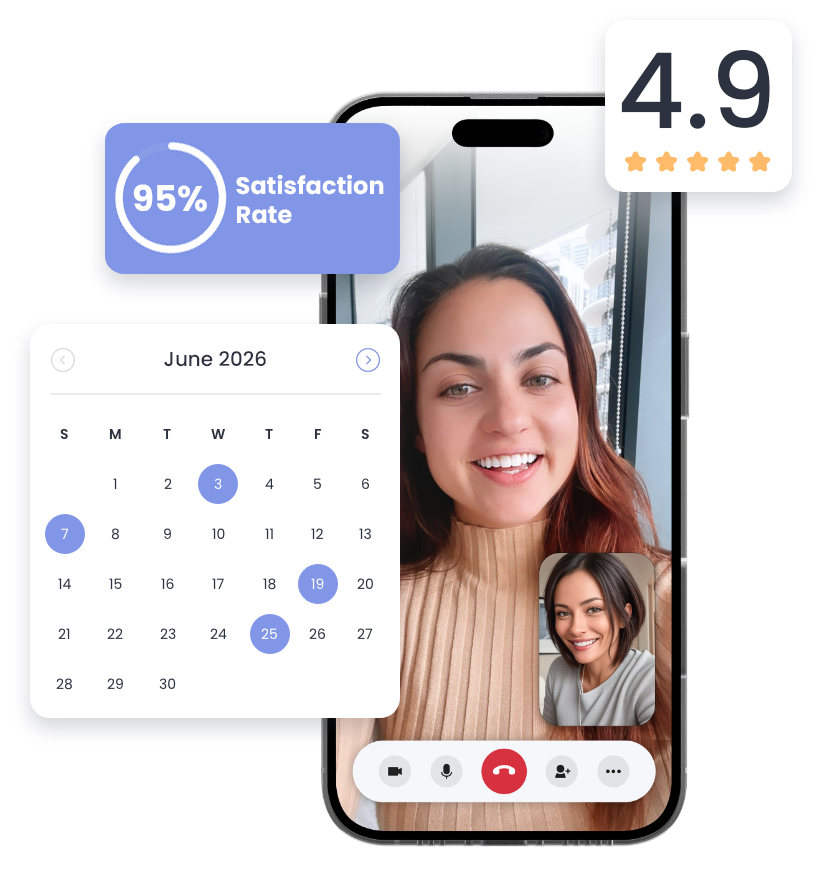
Joymind is a supportive platform dedicated to personal growth, mindset transformation, and emotional well-being. Founded by Rochelle and Michael, Joymind was created for those who have tried many paths but still feel something is missing. We focus on the power of the subconscious mind to support positive change. Our Approach We blend guided hypnotherapy sessions with coaching, neuro-linguistic programming, and principles from positive and depth psychology. Sessions are personalized and conveniently offered from the comfort of your home. We match you with a specialist who best fits your needs and personality. Why Joymind Joymind is the largest 1:1 virtual certified hypnotherapy platform in the US- 95% of clients who fully complete the Joymind program report improvement¹
- 4.9 stars on Google
- 900+ reviews across Google, BBB (A+ BBB accredited), and Trustpilot
- 40+ certified hypnotherapists
- Nationwide (except Colorado, Washington, Connecticut)
- 10,000+ clients
- 40,000+ completed sessions
- Build healthier habits for weight, sleep, and daily wellness
Frequently Asked Questions
Hypnosis supports daily motivation by helping the mind form stronger connections between intended actions and positive emotional responses that occur below conscious awareness. Many people notice that once internal friction decreases, starting routine tasks begins to feel less effortful and more automatic over time. This process works with existing goal frameworks rather than replacing them, allowing motivation to arise more naturally from aligned patterns.
The pace of noticing improved follow-through varies because each person brings different layers of existing habits and internal associations to the process. Some experience earlier shifts in focus or reduced hesitation, while others observe steadier consistency as new patterns gain strength through repetition. Structured hypnosis programs often allow time for both initial insight and ongoing reinforcement so changes can settle into everyday behavior.
Regular visualization typically engages the conscious mind through deliberate mental imagery, whereas hypnosis creates a narrowed state of attention that allows suggestions to interact more directly with automatic patterns. This difference means the emotional and sensory details practiced under hypnosis can integrate at a deeper level than surface-level mental pictures alone. The combination of focused state plus repeated positive associations tends to support longer-lasting shifts in how goals feel.
Many people who have used lists, planners, or accountability systems still encounter internal resistance that those tools do not fully address. Hypnosis can help update the deeper associations that create hesitation or self-interference even when the conscious plan is clear. This approach often proves useful for individuals who already understand what they want to do yet struggle to maintain consistent action.
Hypnosis integrates smoothly with external systems such as time-blocking, written plans, or accountability structures because it reduces the internal friction that can undermine even well-designed tools. Once subconscious patterns become more supportive, existing methods often feel easier to apply consistently. The two approaches complement each other: external tools organize the visible steps while hypnosis helps the automatic mind cooperate with those steps.
Read Also
- How Hypnotherapy Works With The Subconscious Mind
- Beyond Willpower: Rewire Your Routine with Hypnotherapy
- Self-Hypnosis Vs Professional Hypnotherapy: How They Compare
- Your identity is what is keeping you stuck
- Why So Many Successful People Still Feel Stuck
Joymind provides coaching and hypnotherapy support for personal development, habit change, and emotional wellness. Joymind hypnotherapists are not licensed physicians, psychiatrists, or psychologists, and our services are not a substitute for medical or mental-health care. If you are experiencing a medical or mental-health condition, please consult a qualified licensed professional. Individual experiences vary. |
Take the next step toward stronger motivation and successful goal setting with Joymind.