Key Takeaways
|
What Christopher Nolan’s The Odyssey Can Teach Founders, CEOs, and Small Business Owners About Leadership
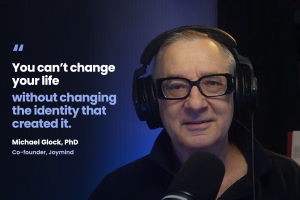
By Dr. Michael Glock, Ph.D.
Co-Founder, Joymind
Most entrepreneurs believe they’re building a business.
In reality, they’re building themselves.
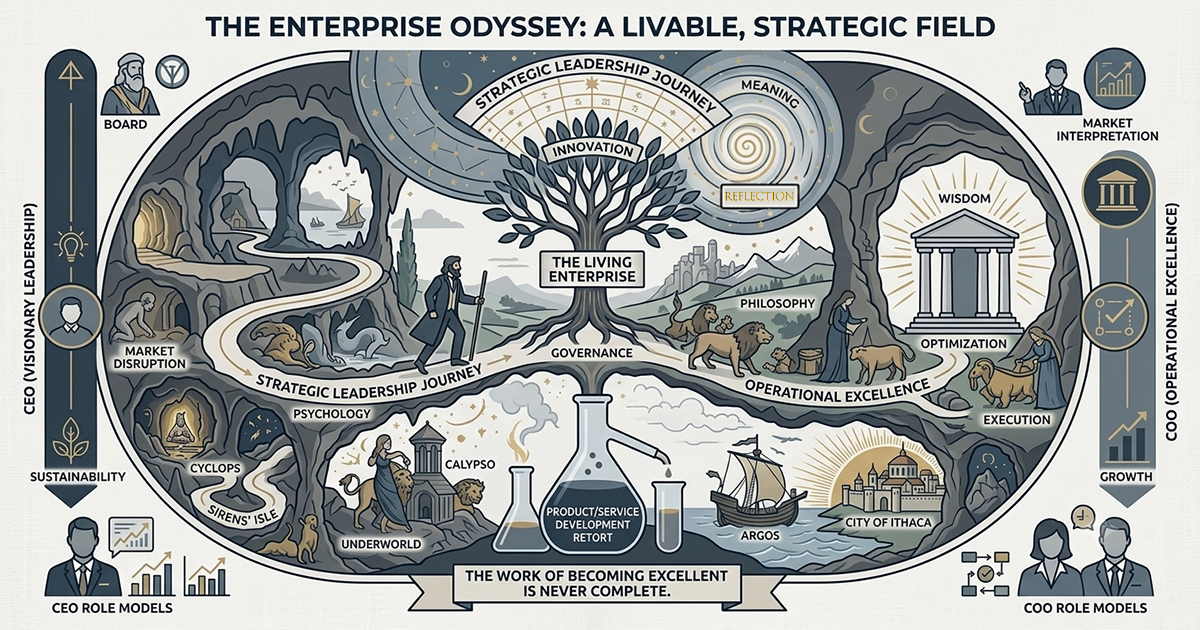
That may sound surprising, but it’s precisely why Christopher Nolan’s upcoming adaptation of The Odyssey feels so relevant today. On the surface, it’s the story of an ancient Greek king trying to find his way home after war. Beneath the adventure lies something much more profound—a map of what every founder eventually experiences.
The business changes.
The market changes.
The leader must change too.
The Business Journey Is an Inner Journey
When we start a business, success seems straightforward. Find customers. Build a product. Hire a team. Generate revenue. Scale.
Those goals matter.
But every entrepreneur eventually discovers another challenge that doesn’t appear in any business plan.
Who am I becoming through this journey?
Carl Jung believed that human development is not simply about accumulating knowledge or achievement. It is about becoming more conscious—integrating the strengths, fears, blind spots, and unrealized parts of ourselves into a more complete human being (Jung, 1959).
That’s exactly what happens in entrepreneurship.
The business becomes a mirror.
It reveals our strengths, but it also exposes our insecurities, our habits, our leadership style, and the stories we’ve been telling ourselves for years.
Many founders think they’re managing a company.
Often, they’re managing their own psychology.
Every Leader Meets the Cyclops
One of the most famous moments in The Odyssey is Odysseus’s encounter with the Cyclops.
The monster has incredible strength—but only one eye.
Psychologically, that single eye represents limited perspective.
As leaders, it’s easy to become convinced that because we’ve been successful, we’re always right. We stop asking questions. We stop listening. We surround ourselves with people who agree with us.
The company grows.
Our perspective shrinks.
The most dangerous leadership blind spot isn’t incompetence.
It’s certainty.
Great leaders never stop developing the ability to see through someone else’s eyes.
Beware the Island of Comfort
Later in the story, Odysseus meets Calypso, who offers him comfort, safety, and an effortless life.
It’s tempting.
But if he stays, his journey ends.
Every entrepreneur eventually encounters their own version of Calypso.
It might be a business that’s profitable but no longer meaningful.
A leadership style that worked five years ago but no longer fits today’s company.
Or simply the temptation to stop growing because growth has become uncomfortable.
Comfort is rarely the greatest reward of success.
More often, it’s the greatest obstacle to future growth.
The Company Reflects the Founder
One lesson becomes increasingly clear after working with hundreds of business leaders.
Organizations often become reflections of the people who lead them.
A founder who struggles to trust creates layers of unnecessary control.
A CEO who avoids conflict builds a culture where difficult conversations never happen.
A leader driven by fear of failure creates a team that’s afraid to innovate.
The culture doesn’t begin with policies.
It begins with psychology.
That’s why leadership development is never just about acquiring new business skills.
It’s about becoming more aware of the invisible stories shaping every decision you make.
Coming Home
In The Odyssey, the real challenge isn’t defeating monsters.
It’s returning home as a different person.
Business works the same way.
Many entrepreneurs spend years chasing revenue, growth, recognition, or the next milestone. Those achievements matter, but they don’t answer the deeper question every leader eventually faces.
What is all this for?
The most successful leaders I’ve met eventually shift their attention from building bigger companies to becoming wiser human beings.
Ironically, that’s often when they become even better leaders.
Leadership in the Age of AI
As artificial intelligence transforms every industry, technical knowledge is becoming increasingly accessible.
Wisdom is not.
AI can analyze markets.
It cannot develop character.
It can organize information.
It cannot cultivate self-awareness.
It can recommend strategies.
It cannot tell you what kind of leader you want to become.
That remains deeply human work.
In the years ahead, competitive advantage won’t belong only to those who adopt better technology.
It will belong to leaders who understand themselves well enough to use that technology wisely.
Every Founder Has an Odyssey
At Joymind, we work with entrepreneurs, founders, CEOs, and business owners who recognize that sustainable leadership begins from the inside out.
Through transformational hypnosis, depth psychology, and identity development, we help leaders uncover the unconscious patterns influencing how they think, lead, communicate, and make decisions.
Because the greatest business strategy you’ll ever develop isn’t simply growing your company.
It’s growing yourself.
Every entrepreneur has an Odyssey.
Not because we all sail across ancient seas, but because every leader eventually reaches a point where the next stage of success requires a new version of themselves.
The question isn’t whether you’ll face that journey.
The question is whether you’ll answer the call.
References
Campbell, J. (1949). The Hero with a Thousand Faces. Pantheon Books.
Jung, C. G. (1959). The Archetypes and the Collective Unconscious (R. F. C. Hull, Trans.). Princeton University Press.
If this article resonated with you, we’d love to continue the conversation.
Schedule a complimentary consultation and discover how understanding your inner world can transform the way you lead your business—and your life.
Frequently Asked Questions
It often appeals to people who notice stress affecting sleep, focus, or emotional balance and want to address the automatic reactions underneath. Those who prefer collaborative guidance over strict directives tend to respond well. A conversation with a provider can clarify whether the approach aligns with personal goals.
Recordings or simple self-hypnosis exercises help strengthen the shifts that occur during live meetings. Regular listening supports the brain’s ability to adopt calmer responses more automatically. Many people treat these tools as part of a steady routine rather than an occasional add-on.
Most run between 45 and 80 minutes, depending on the provider and the person’s needs. The first meeting may include extra time for intake and goal setting. Subsequent sessions focus more on the hypnotherapy work itself.
Yes. Many people combine sessions with movement, breathing practices, or time in nature. The hypnotherapy component helps work with subconscious patterns while other habits support the body and conscious mind. The two layers often complement each other nicely.
Read Also
- Hypnosis Techniques for Stress Relief: A Step-by-Step Guide
- Harnessing the Power of the Mind: How Hypnotherapy Helps You Regain Control
- A Pathway to Calmness, Relaxation, and Better Sleep
- Unlock Your Potential with Hypnotherapy
- Best Hypnotherapy For Habit Change
Joymind provides coaching and hypnotherapy support for personal development, habit change, and emotional wellness. Joymind hypnotherapists are not licensed physicians, psychiatrists, or psychologists, and our services are not a substitute for medical or mental-health care. If you are experiencing a medical or mental-health condition, please consult a qualified licensed professional. Individual experiences vary. |
Ready to experience the supportive, personalized approach of virtual hypnotherapy? Visit Joymind to learn more and get started.