Or: Why your brain isn’t broken, your approach just is
You’ve done the thing, right?
New morning routine. New productivity app. New version of yourself that’s definitely going to stick this time. You commit hard for a week, maybe two, and then… you’re back where you started. Except now you also feel like shit about it.
Here’s what nobody tells you: You’re not failing at self-improvement. You’re just using tools designed for your conscious mind when the actual problem lives somewhere else entirely.
The Real Reason You Feel Stuck
Let’s be honest about what “reinventing yourself” looks like in 2025:
- You’ve changed your aesthetic at least three times
- You’ve tried five different career paths (or at least seriously researched them)
- You have 47 browser tabs open about becoming a different version of you
- You feel like you’re constantly moving but somehow going nowhere
This isn’t a you problem. This is what happens when you’re trying to update your identity like it’s an iPhone—quick, surface-level, and ultimately superficial.
The issue? Your brain doesn’t work like software. It works like layers.
Why Your Brain Keeps Sabotaging Your Goals
Psychologist Carl Jung figured this out decades ago: we all wear masks (he called them “personas”) to navigate the world. Your work self, your social media self, your “I’m totally fine” self when you’re definitely not fine.
But here’s where it gets messy.
When you only work on changing the mask—the surface-level stuff like habits, routines, or external behaviors—your unconscious mind is sitting in the back like “uh, we didn’t agree to this.” That’s when you get:
- Anxiety that appears out of nowhere
- Procrastination that doesn’t make logical sense
- That weird feeling that life is happening around you but not through you
- Imposter syndrome, even when you’re objectively doing well
You don’t lack discipline. Your brain is just trying to tell you something.
Most Self-Help Is Basically Gaslighting
The self-improvement industry wants you to believe that if you just try harder, wake up earlier, or follow the right system, everything will click.
Spoiler: it won’t.
Because most strategies only target your conscious mind—the part that makes plans and sets goals. But your unconscious mind (the part that actually runs the show) controls your habits, emotional responses, self-concept, and automatic behaviors.
It’s like trying to change your Wi-Fi password by yelling at your router. You’re just not accessing the right system.
Why Hypnosis Isn’t What You Think It Is
Okay, let’s address the elephant in the room: when you hear “hypnosis,” you probably think of:
- Stage shows where people bark like dogs
- Losing control
- Woo-woo nonsense with zero science behind it
Real talk: clinical hypnotherapy is none of those things.
Here’s what it actually is: a method for directly communicating with the unconscious parts of your brain that control your patterns, beliefs, and automatic responses. It’s basically a bridge between your conscious intentions and your unconscious programming.
Think of it like this: normal self-improvement is you standing outside a locked door, yelling your goals through the mail slot. Hypnosis is actually getting the key and walking inside to have a conversation.
No magic. No loss of control. Just access to the parts of your mind that actually need to be involved in change.
What Makes Joymind Different
We’re not here to sell you another productivity hack or manifestation journal. Joymind uses clinical hypnotherapy—the actual evidence-based kind—to help you:
- Re-pattern your identity at the level where it actually forms (spoiler: not in your planner)
- Resolve internal conflicts instead of just overriding them with willpower
- Stop living from inherited scripts—whether those came from your family, culture, or the algorithm
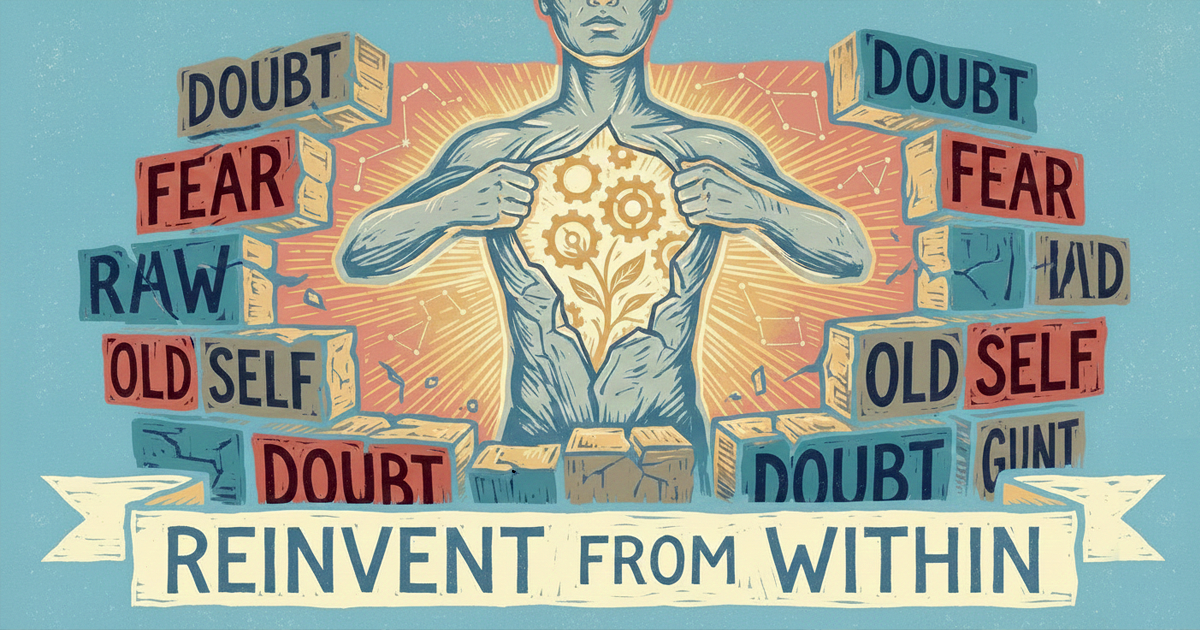
This isn’t about “becoming someone else.” It’s about becoming coherent. Becoming someone who doesn’t have to fight themselves to take action.
What Actually Changes
Here’s what people notice after working with Joymind:
They stop feeling like they’re constantly trying to convince themselves to do things. Motivation stops being this thing they have to manufacture every morning. The internal resistance—that voice that says “but what if you’re not good enough”—just… quiets down.
It’s not that life becomes easy. It’s that it starts feeling like yours.
You stop chasing different versions of yourself and start actually living. Not because you finally found the right framework, but because you’re no longer fighting your own brain.
So What Now?
If you’re reading this and thinking “okay but I’ve tried everything”—good. That probably means you’re ready to try something that actually works differently.
Hypnosis isn’t about losing control. It’s about finally getting it back—not through force, but through alignment.
You don’t need another new identity. You need to stop fighting the one trying to emerge.
Ready to stop performing and start integrating? Joymind isn’t a magic bullet, but it is a different approach—one that works with your brain instead of against it.
Try Joymind and see what happens when you reinvent yourself from the inside out. Not as a last resort, but as an actual intelligent move.
Because honestly? You’re not broken. You just need to stop using duct tape when what you actually need is rewiring.
Clinical hypnotherapy through Joymind is evidence-based, structured, and designed specifically to help you resolve the internal conflicts that keep you stuck. No stage shows, no loss of control—just real change that actually sticks.