Restore Your Calm: How Hypnosis Rewires Your Nervous System for Peace (The Joymind Approach)
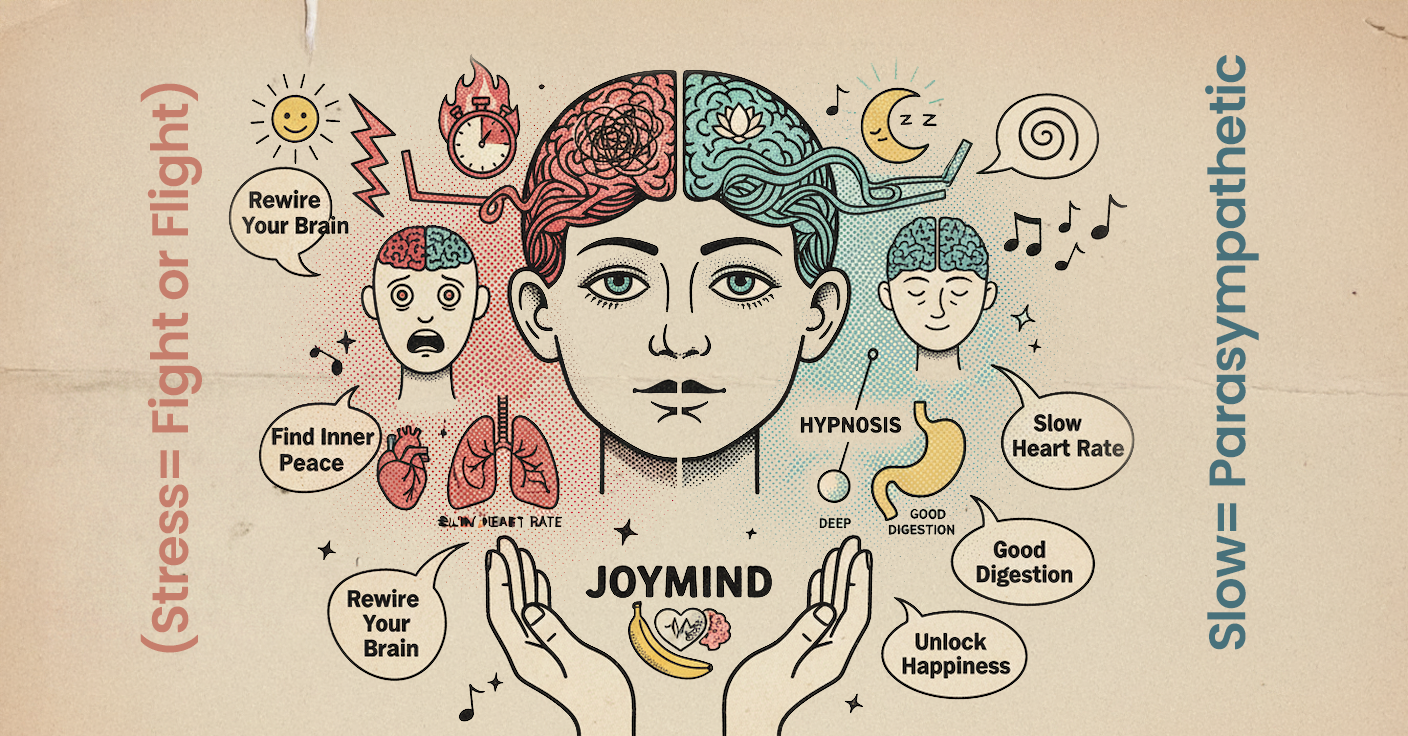
Are you constantly feeling anxious, worried, or just “on”? That relentless, tight feeling is your body stuck in fight-or-flight mode. At Joymind, we know that to find true peace, you need to restore your body’s natural rhythm. We use clinical hypnosis to help you break free from stress by calming your Autonomic Nervous System (ANS).
How Hypnosis Works: A Nervous System Reset
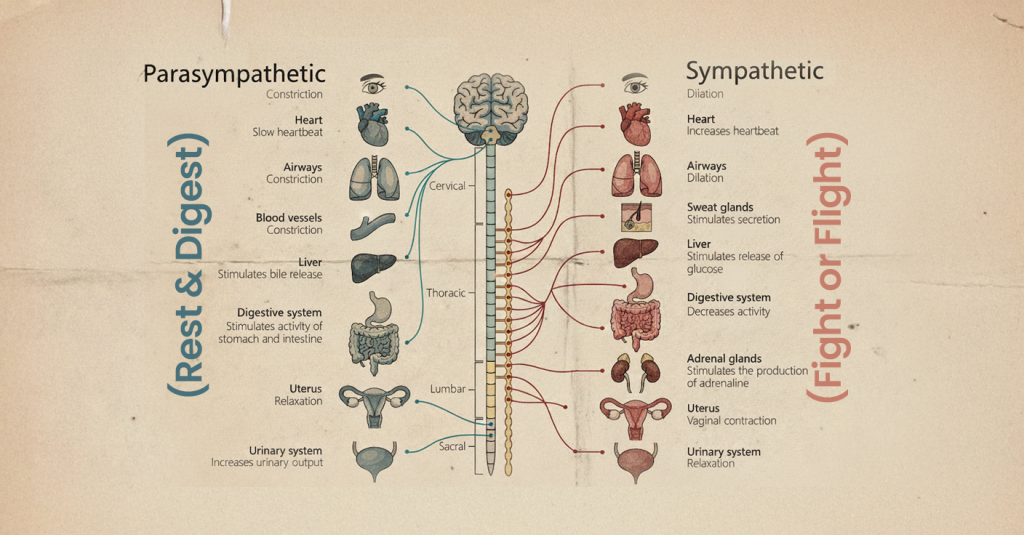
Think of your nervous system as your body’s control center, managing everything you don’t actively think about, like your heart rate and breathing. It has two main sides:
The Accelerator (Sympathetic Nervous System – SNS): This is your stress response. When you sense danger (a real threat or just a scary thought), the SNS speeds up your heart, raises your blood pressure, and floods your body with adrenaline. It’s essential for survival, but in modern life, it gets triggered too easily, leaving us in a constant state of alert.
The Brake (Parasympathetic Nervous System – PNS): This is your “rest-and-digest” mode. It slows everything down, promoting healing, digestion, and deep relaxation.
Hypnosis is a direct way to hit the brake.
When a clinician guides you into a hypnotic state, your brain shifts to a deeply focused, receptive mode. This isn’t sleep; it’s a state where your brain is highly open to new ideas and suggestions [1]. This deep focus acts as a powerful signal of safety to your body, causing a dramatic physiological shift: it reduces sympathetic (stress) activity and increases parasympathetic (calm) tone. You are literally training your nervous system to recognize and remember what calm feels like.
The Joymind Approach: The Power of Intentional Imagination
The Joymind method maximizes the calming effect of hypnosis by integrating it with Depth Psychology, focusing on transformation through your own imagination.
The key insight? Your mind can’t tell the difference between a vividly imagined experience and a real one.
When you are relaxed in hypnosis, we use targeted imagination—what we call “Emotional Imagination”—to create mental scenarios of safety, confidence, and peace. Because your mind is so receptive, simply imagining a positive outcome can trigger the real physical and mental responses associated with it [2].
This process effectively “reprograms” your mind. By repeatedly experiencing deep relaxation and powerful, positive imagery during hypnosis, you build new, healthy neural pathways. This makes it easier to access that “rest-and-digest” state automatically, bringing regulation and resilience into your daily life.
References
Terhune, D. B., Cleeremans, A., Raz, A., & Lynn, S. J. (2017). Hypnosis and top-down regulation of consciousness. Neuroscience & Biobehavioral Reviews, 81(Pt A), 59–74.
Agnati, L. F., Guidolin, D., Battistin, L., Pagnoni, G., & Fuxe, K. (2013). The neurobiology of imagination: possible role of interaction-dominant dynamics and default mode network. Frontiers in Human Neuroscience, 7, 269.